FastBundle Classic · Internal Talk
Agentic
Development.
How we code with AI agents.
by Mahdi Hosseinzadeh Bahreini · Backend Developer
What you'll leave with
01
A mental model
What "agentic" really means.
02
Four levers
Context · Tools · Skills · Models.
03
Token literacy
What we pay for. And why.
04
A checklist
Habits we can use tomorrow.
From autocomplete to agent.
⌨️
Autocomplete
Predicts the next few tokens.
You drive.
💬
Chatbot
Answers your question in text.
You ask.
🤖
Agent
Reads, edits, runs, verifies — in a loop.
You delegate.
The agentic loop · gather → act → verify → repeat
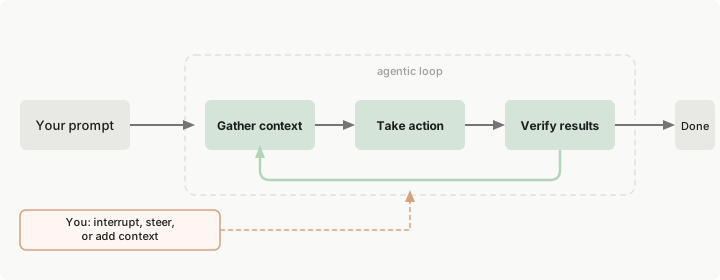
Anatomy of an agent.
Why now?
2026
Reliable tool use. 200K context. Haiku 4.5 cuts subagent cost 3×.
Prompt caching. Plan mode. Checkpoints.
Opus 4.7
Sonnet 4.6
Haiku 4.5
MCP
Skills
Subagents
The rest of the talk
Four pillars
you control.
01
Context
What the model sees.
02
Tools
What the model can do.
03
Skills
What it knows on demand.
04
Models
Which brain we hire.
Pillar 01 — Context · what fills the window
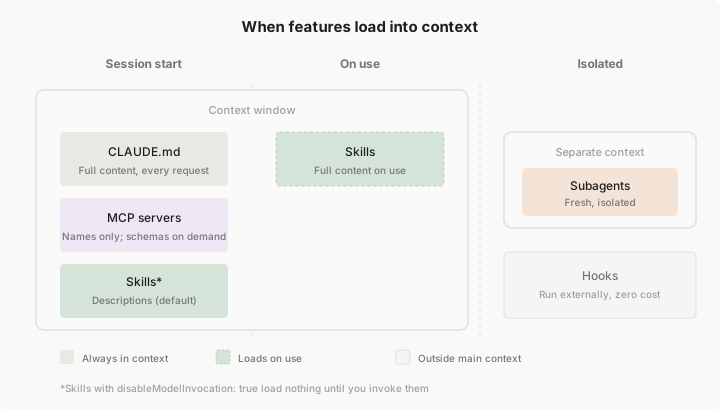
Pillar 01 — Context · Live demo
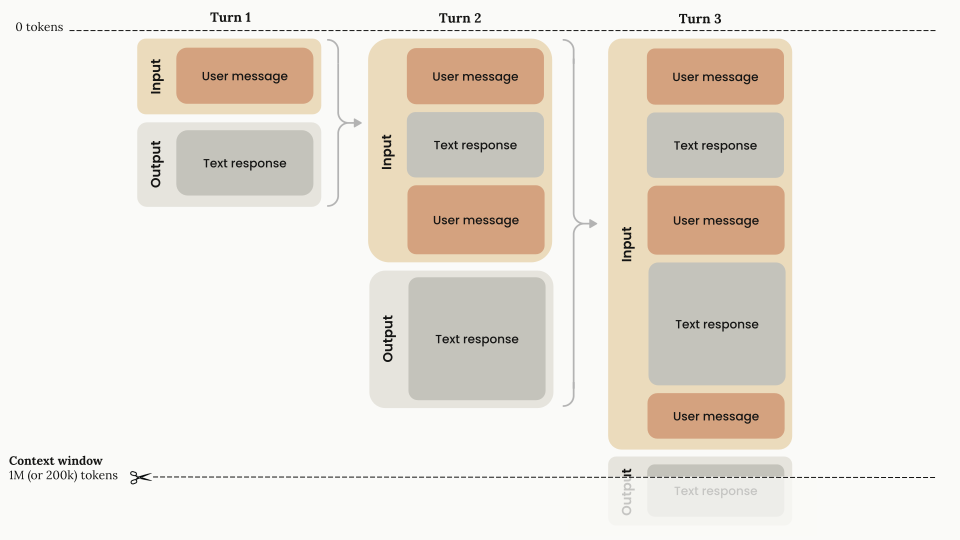
Watch the window fill.
Click Next event ▶ to start the session.
Context grows linearly · every turn keeps the previous ones
Extended thinking · stripped from the next turn automatically
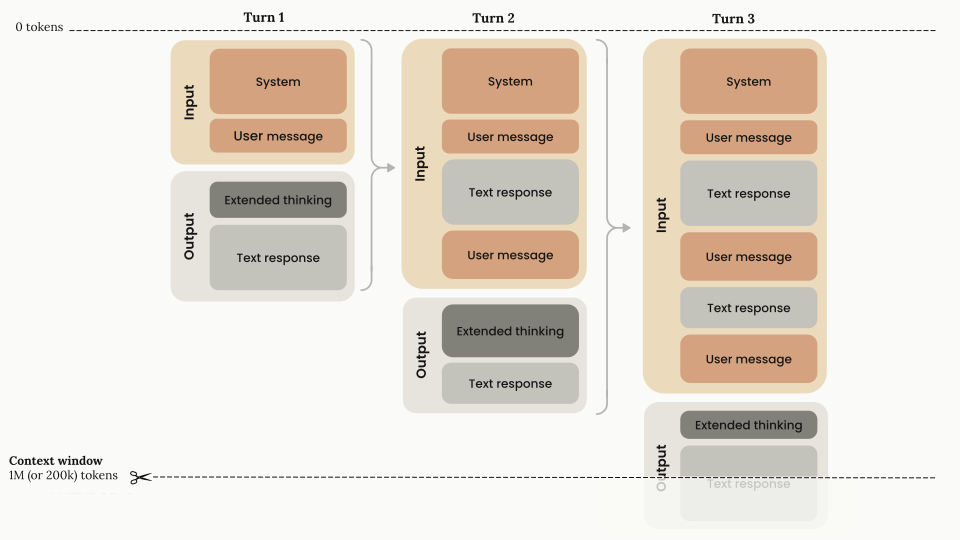
Pillar 01 — Context
CLAUDE.md — under 200 lines.
Keep
- Commands Claude can't guess
- How to run a single test
- Code-style rules that differ from defaults
- Real gotchas (ms vs seconds, etc.)
- Branch & PR conventions
Cut
- Anything Claude can read in the code
- Standard language conventions
- File-by-file descriptions
- Long API docs (link, don't paste)
- "Write clean code"
The test: "if I delete this line, would Claude make a mistake?" If no — delete it.
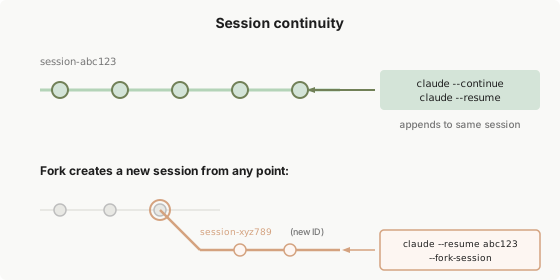
Sessions are reversible · resume vs fork
Pillar 02 — Tools
The model's hands.
Every tool call returns a result. The result becomes context. The context informs the next tool call.
That's the loop.
Pillar 02 — Tools · MCP
Reach into the world.
MCP = open protocol. But: CLI beats MCP when both exist (gh, sentry-cli, aws).
Pillar 03 — Skills
Knowledge
on demand.
Pay context only for skills you actually use. Progressive disclosure.
Pillar 03 — Skills · Examples
Skills we could ship.
/bundle-conventions
Discounts & bundles
Functions patterns, our wrappers, cart-transform gotchas.
/review-shopify-pr
PR checklist
GraphQL deprecations, webhook idempotency, GDPR, billing.
/deploy-staging
Side-effect workflow
disable-model-invocation — manual only.
/repro-issue
From ticket to failing test
Pulls ClickUp + Sentry, scaffolds repro, writes the test first.
Commit to .claude/skills/ — whole team picks them up.
Pillar 04 — Models
Three brains. Pick one.
Opus 4.7
Most capable
Architecture
Long-horizon refactors
When Sonnet is stuck
Sonnet 4.6
The workhorse
Default for coding
80% of our work
Strong + reasonable
Haiku 4.5
~⅓ cost · 2× speed
Subagents
Batch jobs
Verbose, simple work
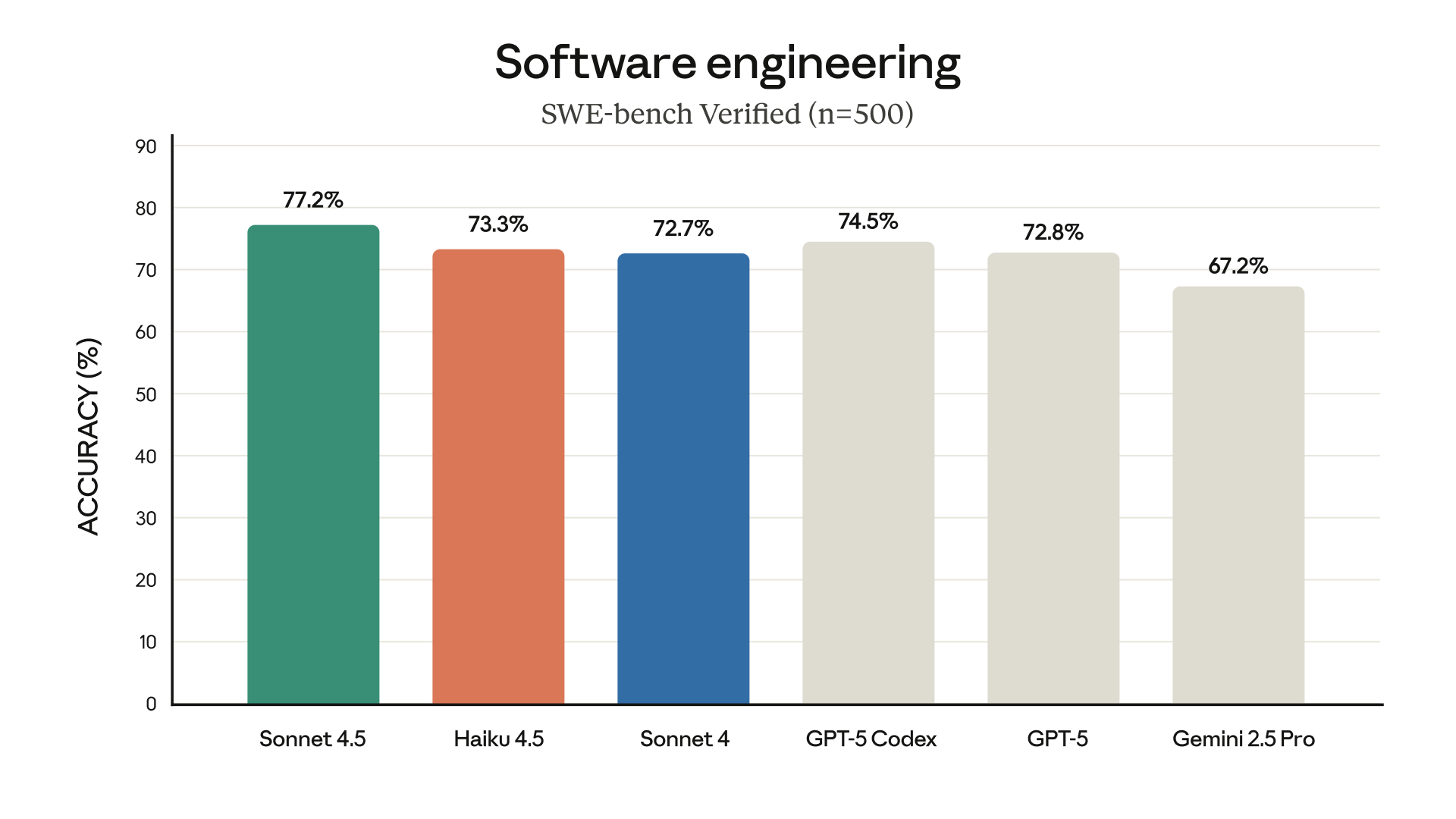
Default Sonnet. Escalate Opus. Delegate Haiku.
SWE-bench Verified · coding benchmark, real repos
The money
We pay for tokens.
$13per developer
per active day
$150–250per developer / month
Anthropic enterprise avg
Context is re-read every turn. 100K context × 20 turns = 2M input tokens.
Context discipline = cost discipline.
The money · Real prices
Per million tokens.
| Model |
Input |
Output |
Cache read |
| Opus 4.7 |
$5.00 |
$25.00 |
$0.50 |
| Sonnet 4.6 |
$3.00 |
$15.00 |
$0.30 |
| Haiku 4.5 |
$1.00 |
$5.00 |
$0.10 |
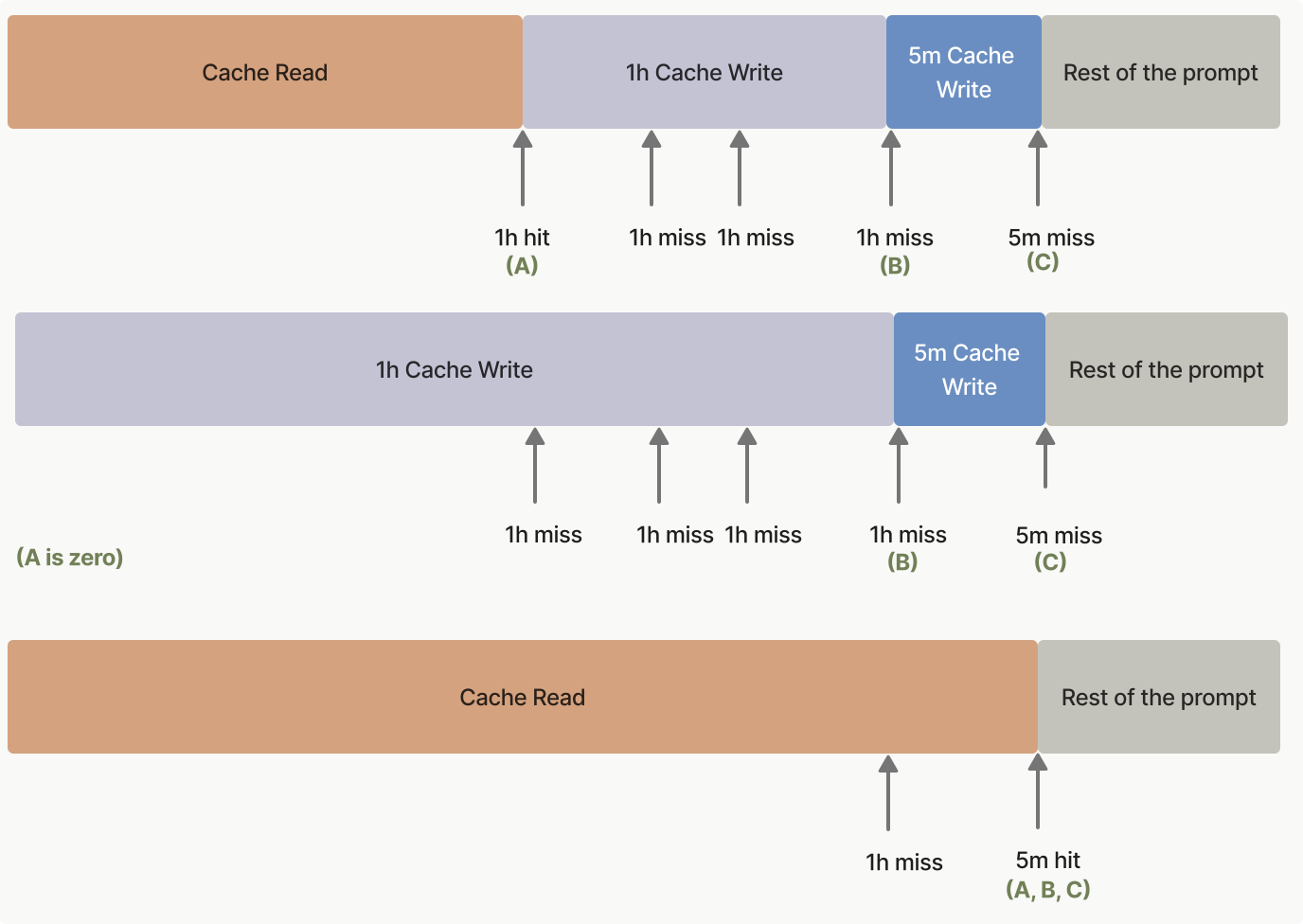
Output costs 5× input. Cache reads cost 10% of input.
A subagent on Haiku is ~25× cheaper than the same work on Opus.
platform.claude.com/docs/en/about-claude/pricing
Prompt caching · stable prefix = 90% cheaper
0.1×
CACHE READ — 90% OFF
Cut the bill — Discipline
Free wins.
No setup.
/clear between unrelated tasks- Specific prompts, not vague ones
- Plan mode for non-trivial work
- Course-correct early (Esc)
- Prune CLAUDE.md
- Lower thinking budget for simple tasks
Cut the bill — Architecture
Setup once.
Pay back forever.
- Move CLAUDE.md content → skills
- Subagents for verbose research
- CLI over MCP when both exist
- Code-intelligence plugins
- Hooks to preprocess data
- Haiku for subagents
Do expensive work where the result doesn't have to live forever.
The takeaway
Habits.
Per task
- Be specific
- Plan mode if scope unclear
- Give it something to verify
- Course-correct early
/clear when switching
Per project
- Lean CLAUDE.md (<200 lines)
- Skills for repeated workflows
- Hooks for guarantees
- Right model for the job
- Audit MCP with
/mcp
"Pay attention to what works.
When Claude produces great output, notice what you did.
When Claude struggles, ask why."
— CLAUDE CODE BEST PRACTICES
Questions?
Mahdi · Backend · FastBundle Classic
- 📖
code.claude.com/docs/en/best-practices
- 🔁
code.claude.com/docs/en/how-claude-code-works
- 🪟
code.claude.com/docs/en/context-window (interactive!)
- 🧠
code.claude.com/docs/en/skills
- 🔌
code.claude.com/docs/en/mcp
- 👥
code.claude.com/docs/en/sub-agents
- 💸
code.claude.com/docs/en/costs